In the context of transformative, transdisciplinary and transnational urban research, such as SURE, diverse topics, disciplines, and actors along with…
Impact-oriented Monitoring
In the context of transformative, transdisciplinary and transnational urban research, such as SURE, diverse topics, disciplines, and actors along with their different knowledge systems converge. To achieve their intended goals amidst this complexity, one must constantly ask: Which approaches truly create impact, and how can we effectively track progress towards these impacts? This is one of the key concerns of the Facilitation and Synthesis Research Project, that provides both scientific and organisational support to the overarching funding priority as well as the individual projects. Traditional evaluation methods – often relying on fixed indicators and independent, one-time reviews – quickly reach their limits when applied to the complex and constantly evolving nature of cities and regions. Many impacts only become visible over time and simple cause-and-effect models aren’t enough to reflect the many interconnected factors that shape sustainable development. Therefore, impact-oriented monitoring needs to evolve towards continuous review, reflection, and iterative adjustment of the interventions. This encompasses responding to the emerging changes, understanding their causes, and initiating ongoing reflection and learning to ensure that the project adapts to evolving circumstances. Such monitoring offers the opportunity to better understand impacts, stimulate intentional project goals by identifying weaknesses and opportunities, adapt projects as they progress, foster team cohesion, visualize success and project goals, and document progress. The SURE REthink Framework was developed precisely to meet these challenges. A brief summary is shown below, more detailed information and application is compiled in the publication “Navigating Urban Development: Learnings from East-and Southeast Asia”
The Rethink Framework
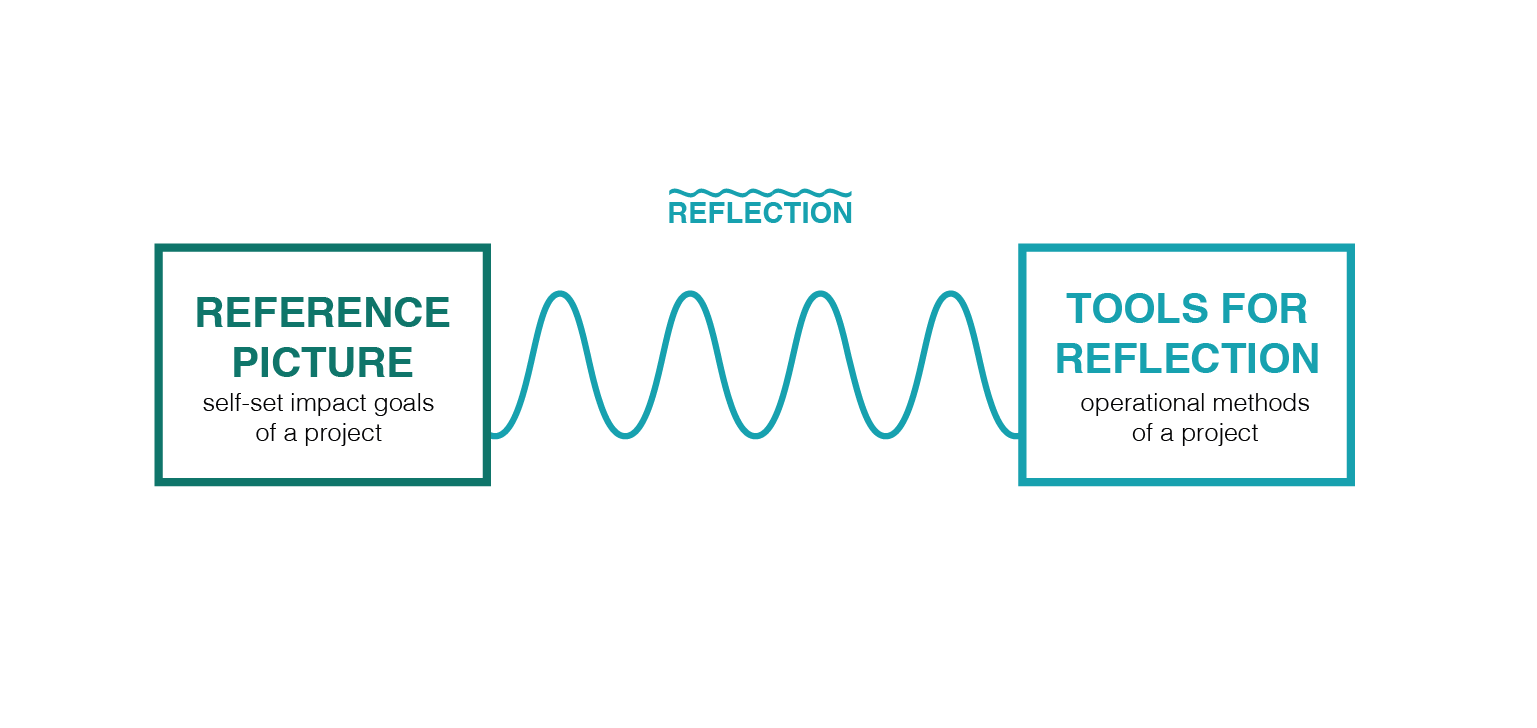
The REthink Framework – or REframe for short – is an impact-oriented monitoring framework designed to navigate the complexity of urban environments and the transdisciplinary nature of sustainability-focused initiatives. It allows urban development projects to observe and track progress toward impact and make those impacts visible in a un-biased way, both at the individual project level and across broader programme scales. REframe consists of two dynamic, adaptable components: self-set REferences and a practice of REflection.
REferences as the Frame
At the heart of REframe are individually defined References tailored to each project. These act as a guiding framework that allows every project to set and pursue its own impact goals.
REflection as a Practice
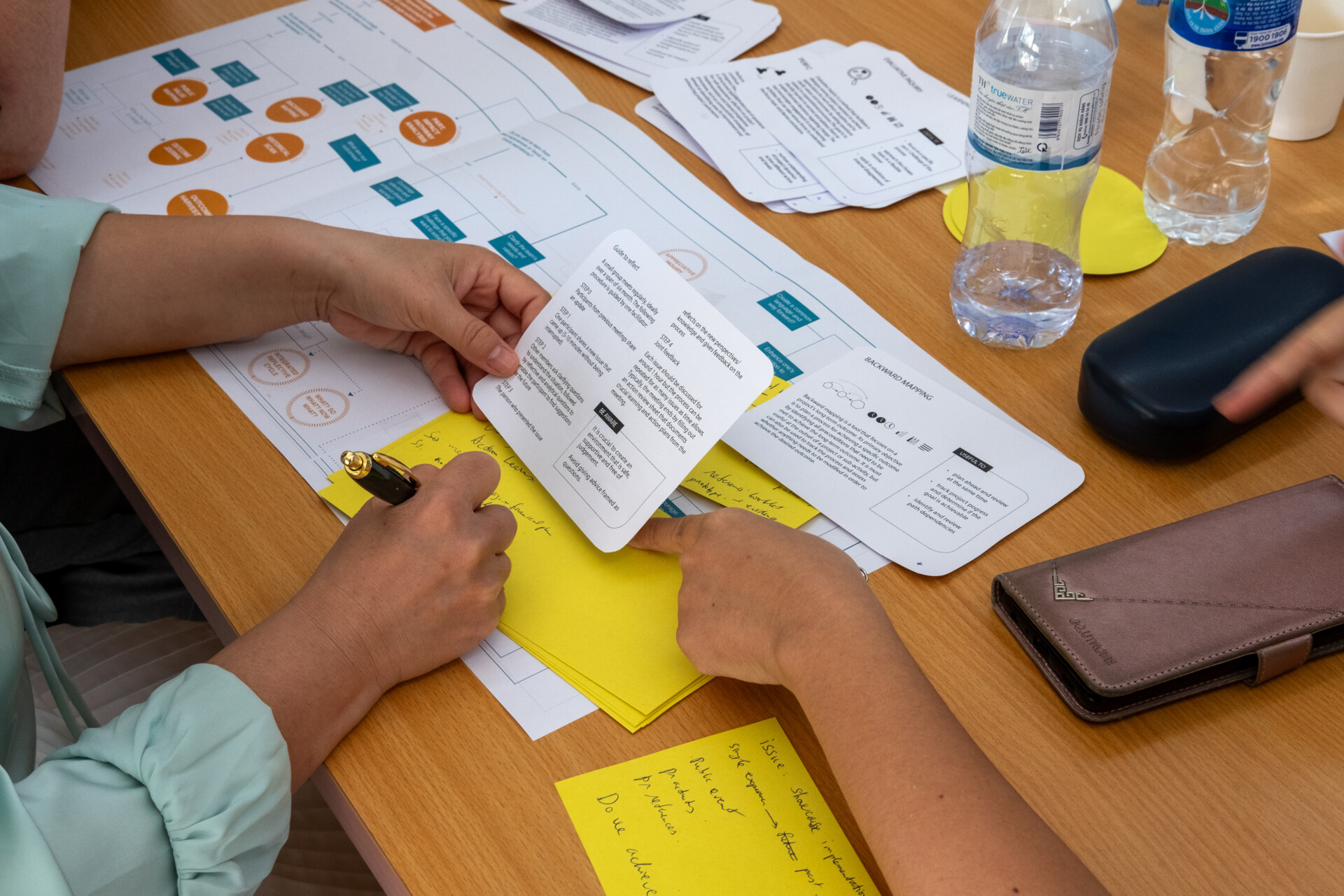
Another central element of REframe is a reflective practice that encourages continuous REthinking. This ongoing reflection helps teams track their progress toward their References, adapt strategies when needed, and fine-tune their actions as circumstances change. By embedding reflection into the workflow, REframe enables teams to regularly question and improve what they do.
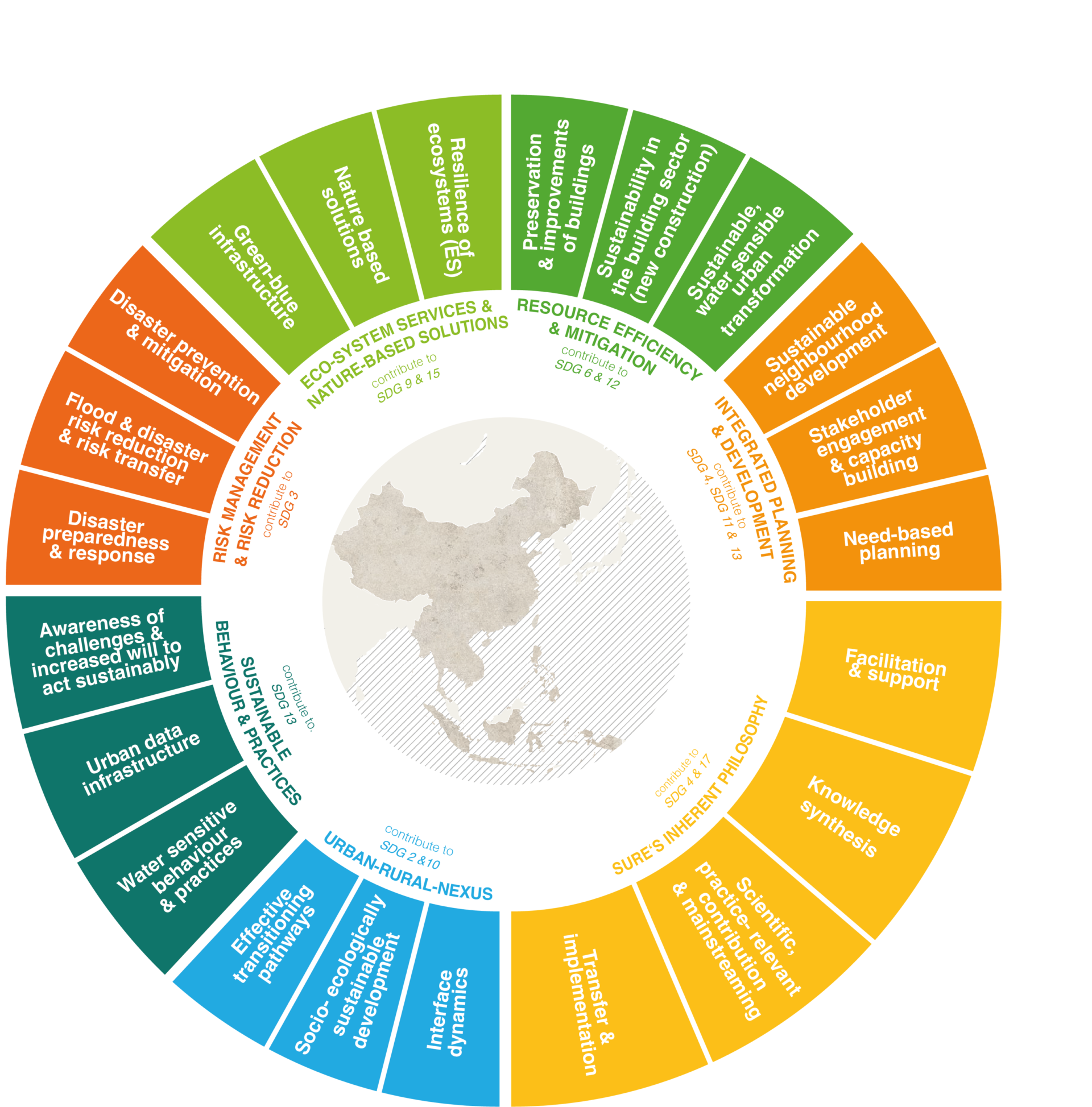
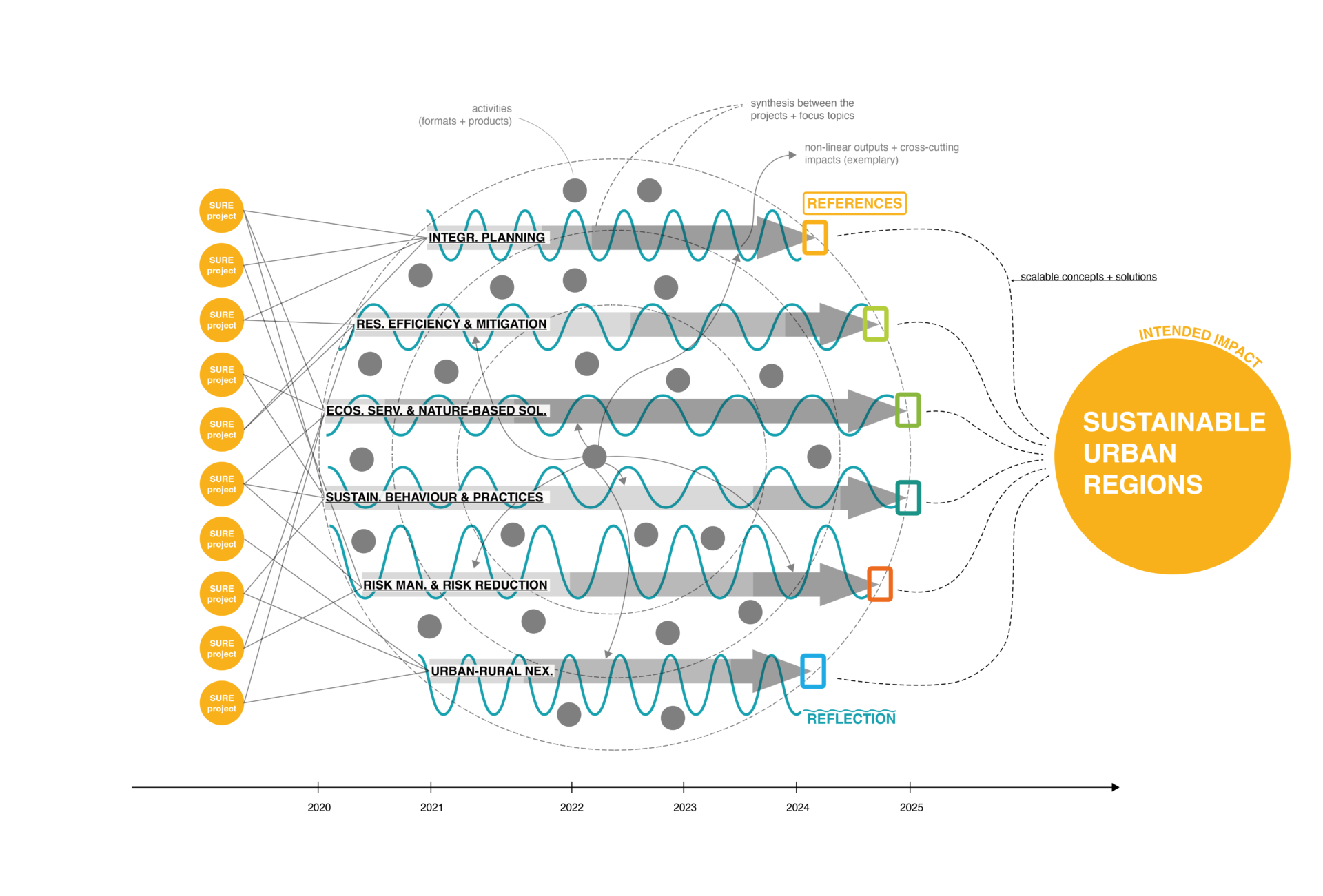
REframe provides a framework for observing the impact of urban development projects, using SURE as an example. Reading the model below from left to right, it shows the individual contributions of the urban development projects (in this case, the ten SURE projects) within their respective themes (the six SURE Focus Topics). Each project aims to achieve its self-defined References, represented at the end of each arrow. While each project pursues its own objectives, together they contribute to the overarching goal of fostering sustainable urban regions. The visual amplitude represents the continuous Reflection processes that accompany project implementation, helping to ensure that the References are achieved as effectively as possible. Through ongoing cycles of reflection, feedback, learning, and adjustment, REframe supports dynamic adaptation to evolving thematic priorities and specific local contexts. The strength of REframe lies in its ability to look beyond individual projects, addressing systemic and global challenges ensuring that local efforts are aligned with global sustainability agendas, such as the SDGs. This broader perspective strengthens the ability to evaluate contributions at different levels, from local initiatives to international goals. In essence, REframe provides a dynamic and adaptable framework for monitoring progress towards impact in urban development projects through the achievement of References. The ongoing practice of reflection and adaptation ensures that these projects remain responsive and relevant, evolving as new insights and conditions emerge. Together, References and Reflection within REframe empower urban development projects to track progress while continuously adjusting strategies to achieve meaningful impact.
The strength of REframe lies in its ability to look beyond individual projects, addressing systemic and global challenges ensuring that local efforts are aligned with global sustainability agendas, such as the SDGs. This broader perspective strengthens the ability to evaluate contributions at different levels, from local initiatives to international goals. In essence, REframe provides a dynamic and adaptable framework for monitoring progress towards impact in urban development projects through the achievement of References. The ongoing practice of reflection and adaptation ensures that these projects remain responsive and relevant, evolving as new insights and conditions emerge. Together, References and Reflection within REframe empower urban development projects to track progress while continuously adjusting strategies to achieve meaningful impact.
You are currently viewing a placeholder content from Facebook. To access the actual content, click the button below. Please note that doing so will share data with third-party providers.
You are currently viewing a placeholder content from Instagram. To access the actual content, click the button below. Please note that doing so will share data with third-party providers.
You are currently viewing a placeholder content from X. To access the actual content, click the button below. Please note that doing so will share data with third-party providers.